PROFESSOR TONY CURTIS: FIVE TALKS
All fully illustrated with Powerpoint images
The Glamorgan Icarus
How the most famous American poem of the Second World War
came to be written in south Wales.
Above me the stars, in all their brittle intensity, seem to watch with me through the long night’s vigil and I am not alone.
On the 18th of August, 1941 a young American airman took off in his Spitfire from the Operational Training Unit in Llandow, near the town of Llantwit Major in the Vale of Glamorgan. He rose to some 30,000 feet over the Bristol Channel and Somerset. He landed safely and later that day began to write a sonnet which he sent to his parents on September 3rd.
Oh! I have slipped the surly bonds of Earth
And danced the skies on laughter-silvered wings;
Sunward I’ve climbed, and joined the tumbling mirth
Of sun-split clouds, – and done a hundred things
You have not dreamed of – wheeled and soared and swung
High in the sunlit silence. Hov’ring there,
I’ve chased the shouting wind along, and flung
My eager craft through footless halls of air…
Up, up the long, delirious burning blue
I’ve topped the wind-swept heights with easy grace
Where never lark, or even eagle flew –
And, while with silent, lifting mind I’ve trod
The high untrespassed sanctity of space,
Put out my hand, and touched the face of God.
John Gillespie Magee’s poem “High Flight” is now held in the John Magee Papers in the Library of Congress Manuscript Collection in Washington D.C. It is one of the most quoted and cited poems in the USA’s war experience.
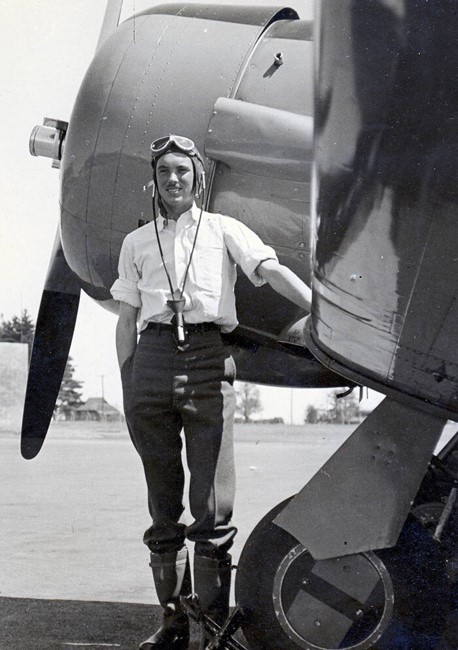
John Gillespie Magee Jnr. in training.
Augustus John, Sir William Orpen and the Beautiful German Spy: Artists and the First World War.
A Powerpoint talk with over seventy images by Tony Curtis
(also referencing Gwen John, Christopher Williams, David Jones, Paul Nash, John Nash, Sir Frank Brangwyn, Henry Moore, Otto Dix and John Singer Sergant)
John and Orpen were two of the most celebrated painters of their age. They were also official war artists on the Western Front: each was sent home in disgrace; one fell in love and became the most compelling painter of the conflict. They moved in the highest circles – Winston Churchill, Lloyd George, Charlie Chaplin, the press baron Lord Beaverbrook, the fabulously wealthy Sir Philip Sassoon. They painted the most beautiful society women and the world leaders at The Treaty Conference in Versailles in 1919.
And then there was Yvonne, “the German spy” implicated in their time on the Western Front.
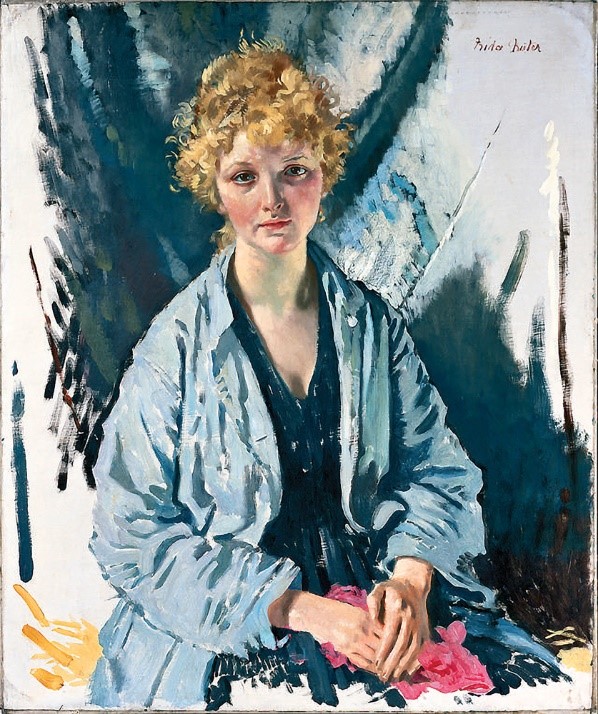
Her story continues through the racing and heady Twenties and Thirties, the French Resistance and beyond.
Each of these historical figures would, eventually, be commemorated by public statues – but where and when?
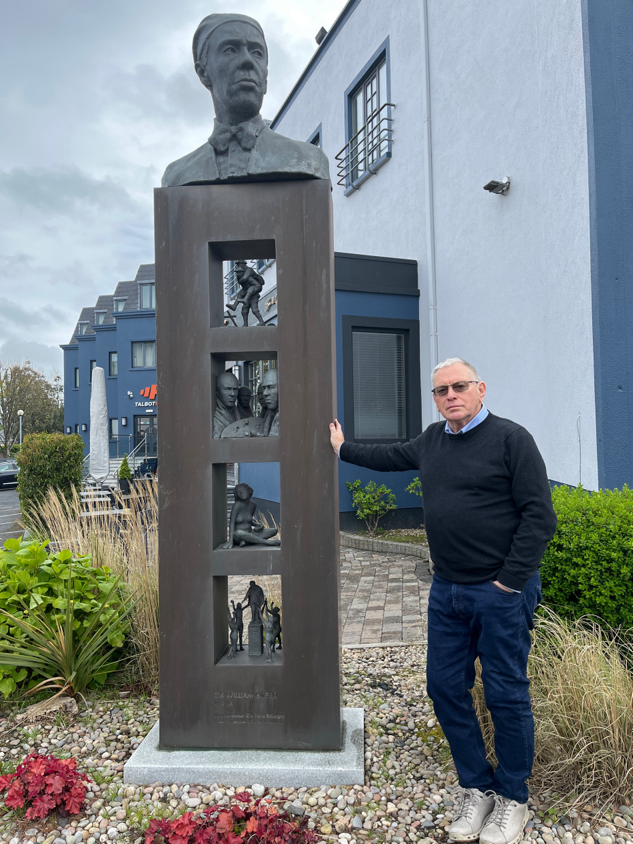
Tony at the Orpen statue in Stillorgan, Dublin 2024.
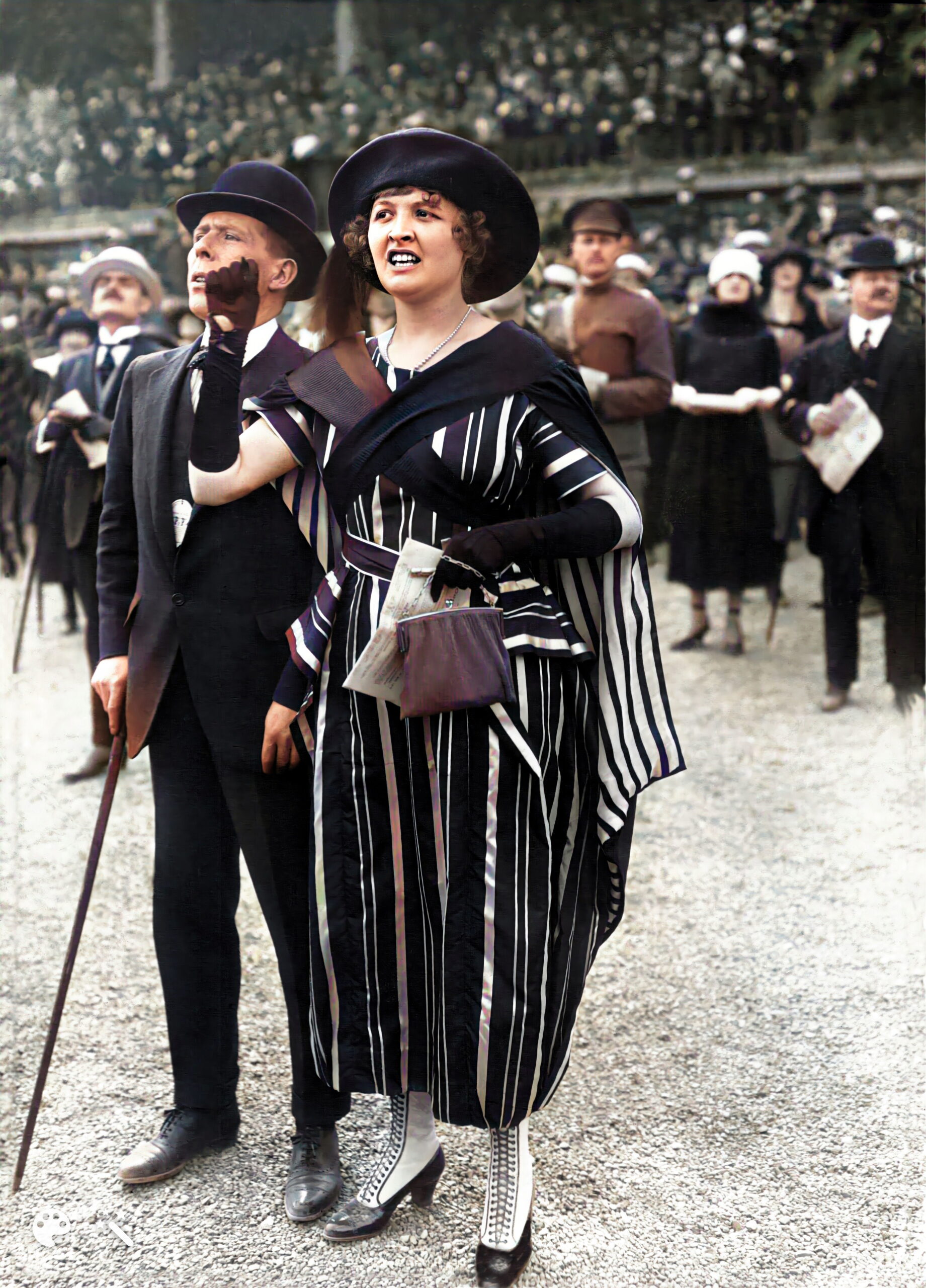
The “spy” Yvonne and Sir William Orpen at the races, 1919.
Augustus John in uniform at the Front……Sir William Orpen – self-portrait in France , 1917.
John Singer Sargent “Gassed”.
Wales and Second World War: poets, painters, pacifists and my parents.
An illustated talk by Tony Curtis
Which Welsh poet helped to break the Enigma Code?
And why was Dylan Thomas machine gunned in west Wales?
What connects south Wales and the traitorous Nazi broadcaster “Lord Haw
Haw”?
This talk follows the chronology of his parents’ war service – the Royal Artillery and the Women’s Land Army – beginning in Pembrokeshire and Carmarthenshire, and the experiences of their contemporaries in Wales and beyond, at war and on the home front – including the work of Dylan Thomas, Vernon Watkins, Raymond Williams, Ceri Richards, Glyn Jones, John Tripp, Alun Lewis, Leslie Moore, Ray Howard Jones, Dannie Abse, Wynford Vaughan Thomas, Raymond Garlick and David Lloyd George.
This is a fully illustrated Powerpoint talk with extracts from Tony’s anthology After the First Death:Wales At War, which Seren published. With photographs and paintings, poems, fiction and first-hand accounts, this is a fitting focus for remembering the Second World War.
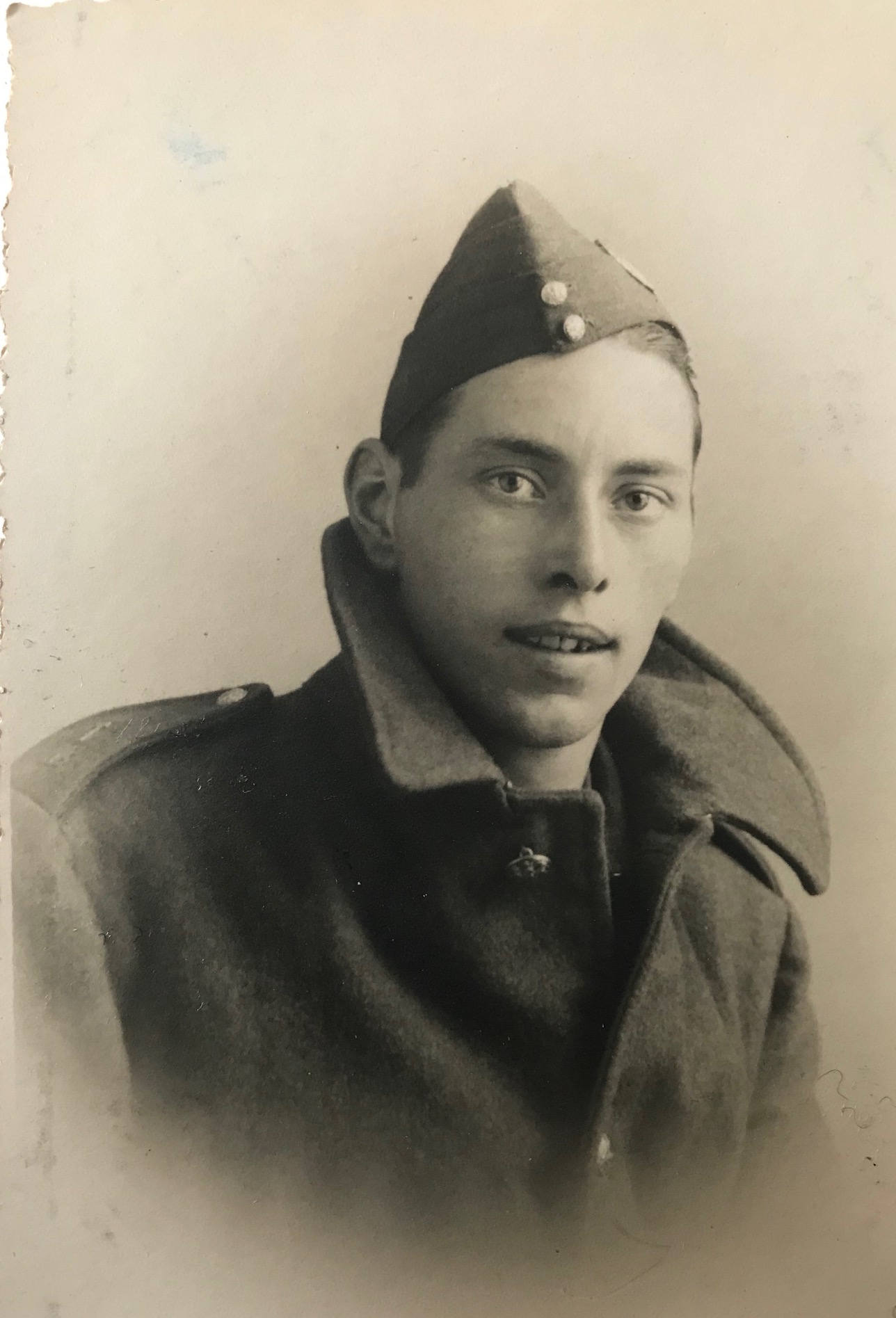
Leslie Thomas Curtis in 1939
From Pembrokeshire to Passchendaele and Perth: my family in the Great War
An illustrated talk which weaves stories about his family at war and some of the most notable writings and art of the conflict.
In this Professor Curtis traces some of the stories of the Curtis and Barrah families from Tallyho Farm in Llangwm to the Battle of Jutland, the Battle of Cambrai and a grave alongside those of Chinese labourers; to Perth, Australia and the ancient kingdoms in Mesopotamia. The remarkable narrative reaches as far as contemporary Hollywood. He will read from the work of amongst others Siegfried Sassoon, Kate Roberts, Hedd Wyn, David Jones, Wyn Griffiths, R.S.Thomas and Bertrand Russell. He will illustrate his talk with the art of Paul Nash, David Jones, Sir William Orpen, E.H. Shepherd, Lucy Kemp-Welsh and Frank Brangwyn.
Tony has researched the Great War experiences of both his Pembrokeshire and Berkshire families. Every region and nation in Britain and its empire served in the war and suffered huge losses. Remarkably though, three of the most significant Great War writers served in the Royal Welsh Fusiliers: Robert Graves, David Jones and Siegfried Sassoon and there is a particular Wales contribution to the fighting and to those objectors of conscience. There will be readings from these writers and others from Tony’s Seren anthology After the First Death as well as his own poetry and recent research. The Barrahs from Pembrokeshire and the Curtises from Berkshire served and died in conflicts from South Africa and Mesopotamia through the Western Front to the North Sea. Tony will weave together untold, remarkable stories and some of the most memorable writing of the century in a tour that already takes in three festivals and National Museum of Wales and the National Library of Wales.
Tony has produced three books on the subject of war and is the only poet from Wales to have published a collection dedicated entirely to the subject. War Voices (Seren 1995) brought together poems from the American Civil War, through the two world wars to the Balkans conflict and the nuclear threat. And his anthology After the First Death is a definitive collection of the Welsh experience of War. Seren published a companion volume of essays: Wales at War: Critical Essays on Literature and Art.

Above:
James Charles Thomas, the writer’s Gran’s cousin who died Nov. 1917 in the Battle of Cambrai. In the twelfth century the Llangwm area was settled by Flemings brought over by Henry I; James by dying in Flanders was completing a circle.
And the painting “Zillebeke, 1917” by Sir William Orpen.
Below are Fred and Jack Barrah in Australian Light Horse uniforms with their mother Sarah just before embarking for Europe and the war in 1915. They were descended from my family who emigrated as “Diggers” in 1856. Both men were wounded, but survived.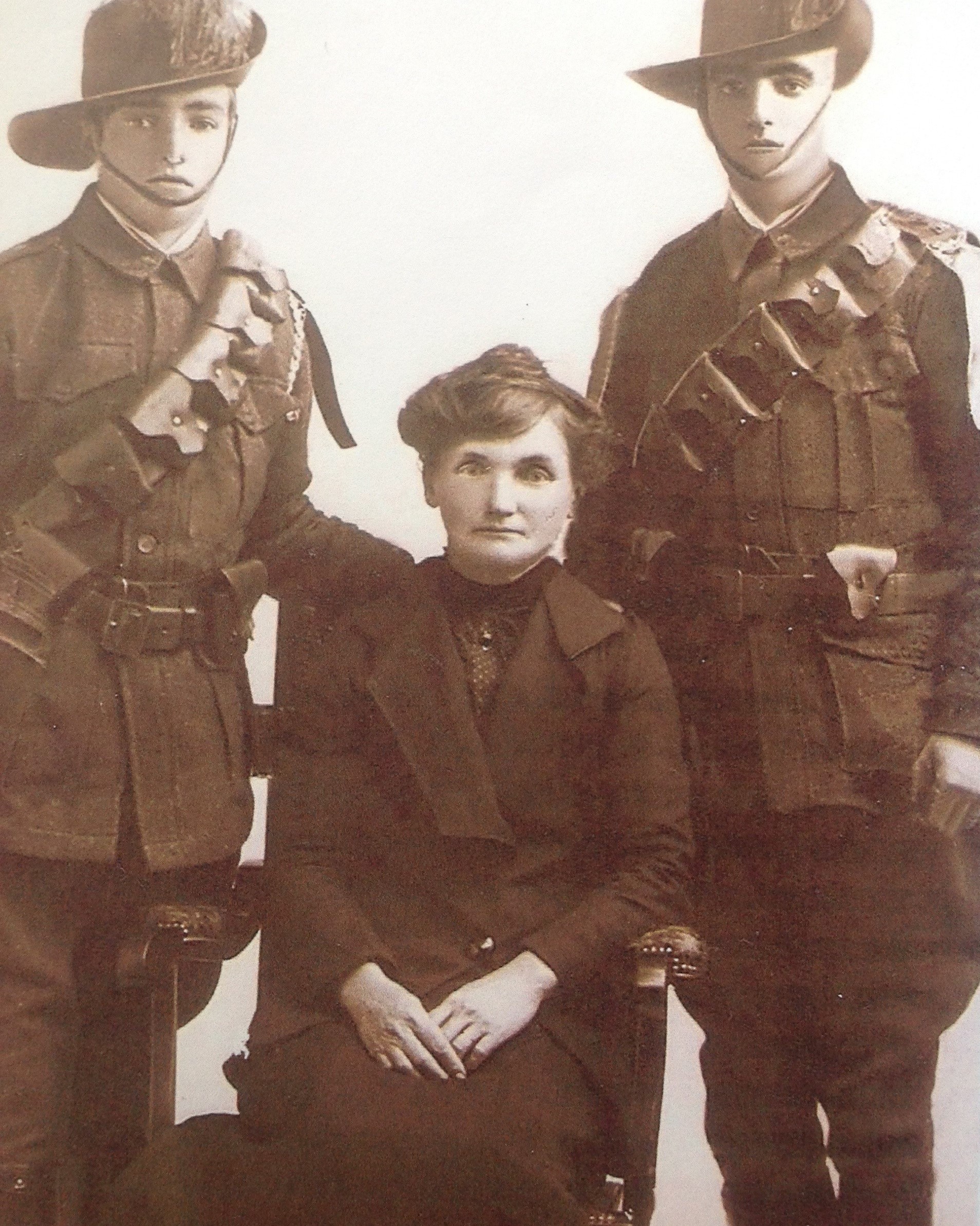
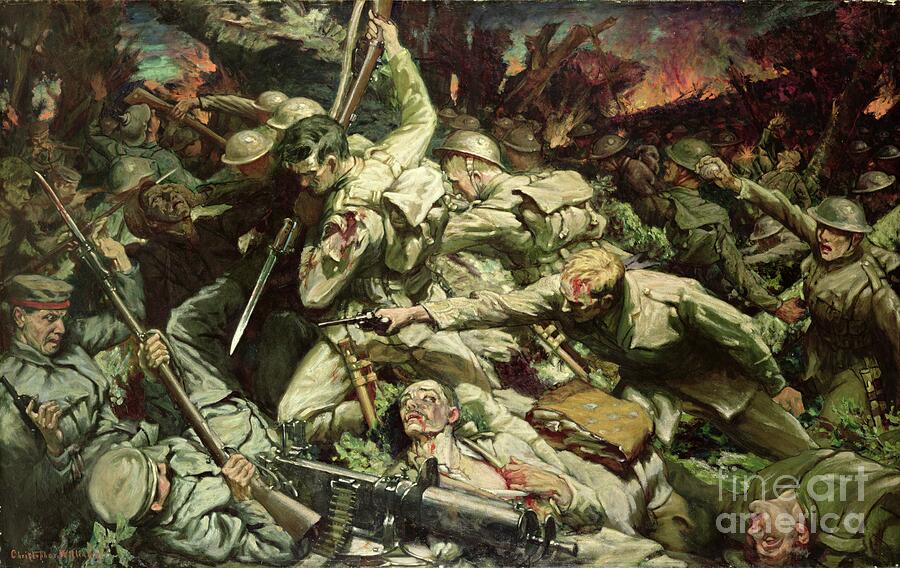
The Welsh at Mametz Wood by Christopher Williams
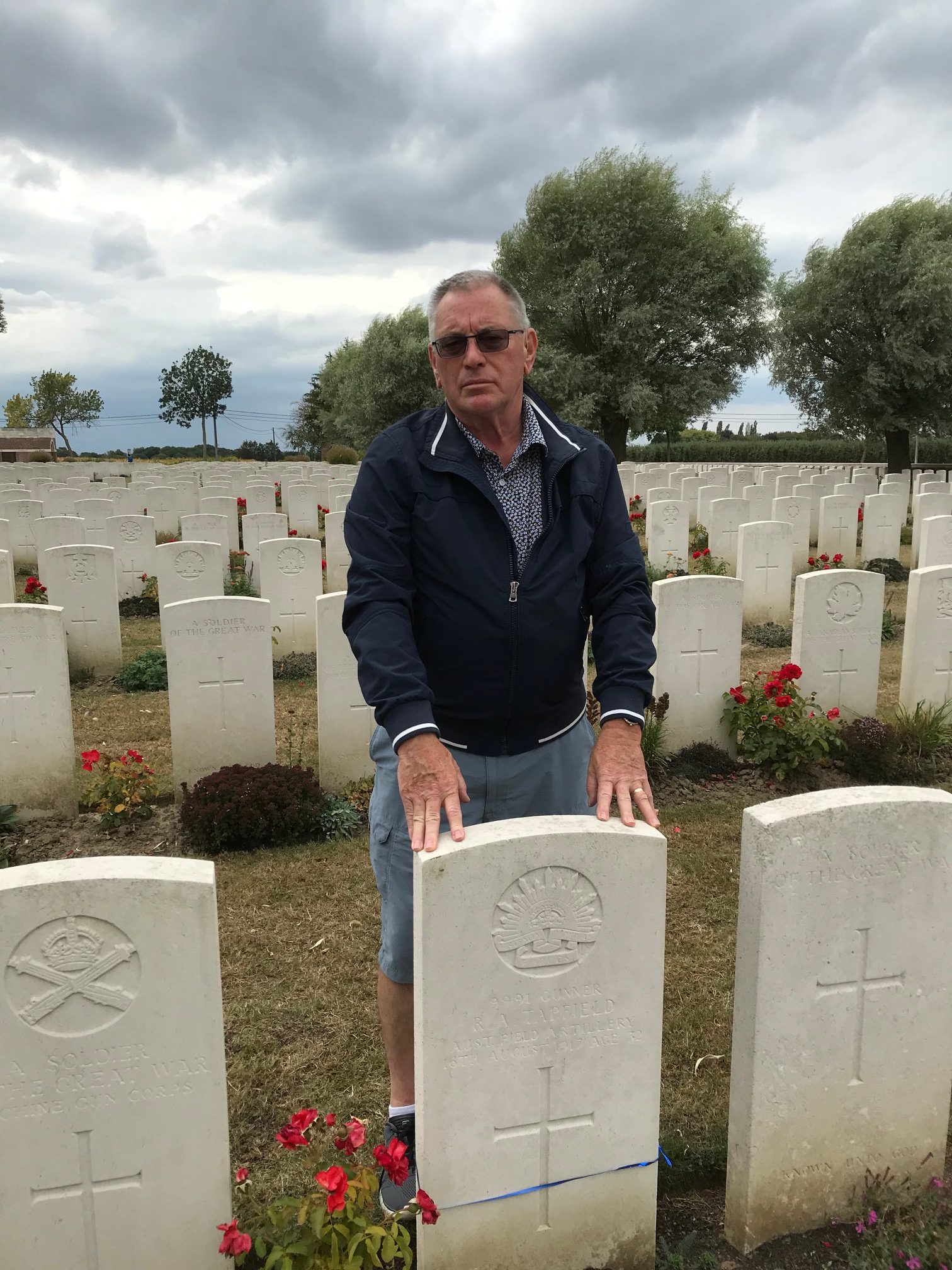
At the grave in China Wall/Perth cemetery in Flanders at the grave of the man whose death was witnessed by my Australian relative Fred Barrah in 1917.
Darkness in the City of Light – Occupied Paris and its most notorious serial killer.

At the end of the war in Paris the most extraordinary murder trial took place in the Palais de Justice. Dr Marcel Petiot – France’s most prolific mass murderer, or Resistance patriot?
Professor Curtis’s talk, based on his prize-winning novel, explores a mind occupied by evil in a city occupied by the Nazis. It is an intriguing and barely credible narrative. It is a true story.
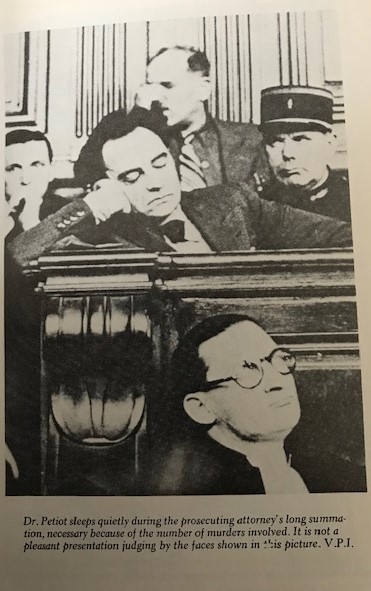
Petiot’s trial achieved international fame.