The Spanish Civil War article and poem


This article and poem, together with some more images and links, was published online by Nation.Cymru in June 2026.
Vueling VY1240

Some holiday thoughts and a poem

Tony Curtis


Cardiff International Airport is about two minutes’ bird-strike flight from our house in the Vale, but we are as likely to drive across the Bridge and catch a cheaper flight from Bristol; there are more flights, more destinations and cheaper deals. But it doesn’t feel right. Rhoose is our airport and we should fight to keep it going.

There are currently only two Spanish mainland destinations: Malaga and Alicante. Malaga has been our choice for the last three trips to Spain; it’s a fine, modernised city with good museums, including the Museo Picasso, his birth place and the Museo Carmen Thyssen. A pedestrianised city centre means you may shop until you drop; all the international big names are there.

But Alicante, that bucket and spade dropping off place, has been recommended by friends and so Flight VY1240 it is. They promise art and, of course good food. Also, we can go by train to Murcia and Valencia, which we do.

In truth, the art was not outstanding, but our reasonably-priced flat was well placed and pretty well new. Our away-break one-night hotel in Valencia was very good and a few yards from the Ceramics Museum there; it’s grandly titled Museo Nacional de Cerámica y de las Arts Suntuarias González Martí.

Alerted by Michael Portillo’s TV guide to his family’s roots in the city, we covered a lot of ground in the time we had, including brunch at the Market’s tapas counter, fuelled by the Michelin chef, Ricard Camarena, superb, but still affordable.

As for Alicante: there’s the looming Castillo de Santa Barbara, a modern harbour and promenade. Not quite Nice, but pleasant enough. From the castle you have a panoramic view, from the mountains to the north of the city to the crowded beach parasols. The trip from the airport is short and not unpleasant. The airport: the ticket CWL to ALC does not indicate that the airport in Alicante is “Alicante-Elche Miguel Hernández”. Originally, “El Altet”, then “Aeropuerto de Alicante-Elche”, from 1969, it was steadily developing into a major hub, with some eighteen million passengers annually now. Cardiff last year had fewer than a million passengers.

Perhaps a change of name would help Cardiff? What about the “Dylan Thomas Airport”?  Or passing through the “Gareth Edwards Lounge”?  Liverpool has “John Lennon”; so perhaps Tom or Shirley for Cardiff?

Well, how many people land in Alicante without checking the name? I hadn’t. To my shame. For Miguel Hernández was a rural poet who got caught up in the Civil War and died a prisoner of the fascist regime of General Franco in 1942. Incarcerated in a succession of prisons, he died of untreated tuberculosis in Alicante. He was thirty-one. There’s a curved metal slab with his name on in front of the Palacio de Justicia, a museum in his home town of Orihuela and a series of murals in San Isidro. Also, there is a memorial on the site of the Nationalists’ prisoner camp, now a bare field in Albertera, placed in 1995.

The airport’s name was changed in 2021, to mark the 110th anniversary of the poet’s birth. And that is remarkable; the remembrance of the Spanish Civil War is contested and an ongoing root of deep divisions in Spain, so the re-naming is a clear act of defiance. Flying into Alicante, one is going to the final place of Republican resistance in that war. Though one may spend days in the sun and the museums and restaurants unaware of that. It is only this year that tours of war-sites and of the bomb-shelters are being advertised. There were over ninety bomb shelters in the city.

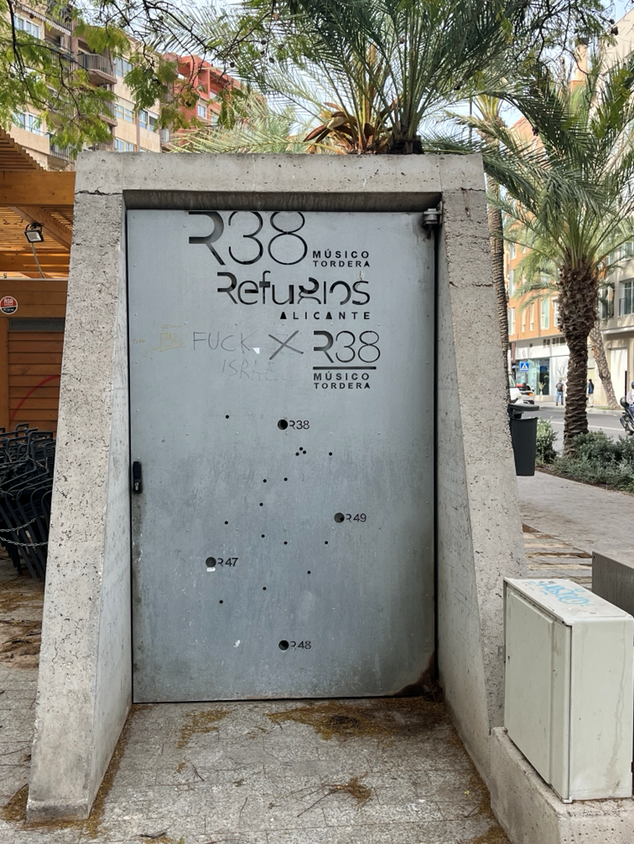
There is a small museum – the Centro de Interpretacion sobre los Refugios Antiaereos, which opens from this Spring, too late for us. But, as I discovered, it’s not too hard to spot many of the shelters; all numbered and most of them concreted, with steel doors.

I feel bad about coming to these issues so late in my life and career. Reading Dannie Abse’s Ash on a Young Man’s Sleeve and writing critiques of that great poet’s work, of course I had followed through on the associations of the scene where the young boy is taken to the memorial service for a fallen International Brigade volunteer, “Jimmy Ford”, who had died at the battle of Brunete. He was, in fact, Sammy Morris from Ammanford. “The Fifteenth Brigade, ragtime idealists, advance; but Jimmy Ford lay horizontal, akimbo, on the dusty road near the tobacco fields, the vision of a white, deserted farmhouse leaking out of his surprised eyes.”

Much later, my friend and mentor Dannie had mentioned the influence of Miguel Hernandez, but I had not followed up on that. There is a selected poems still available from Bloodaxe Books. Apparently, well translated and, certainly, generous in its scope; Hernandez lived a short life. As a writer he was relatively untutored, but lauded, a sort of Spanish John Clare. The War put him on the right side of history and he gave poetry readings and wrote a play to support the Republican cause. He was well-reviewed and could have expected a literary career. However, the Nationalists caught up with him; he was badly beaten and at one point he was condemned to death. Other writers campaigned for a reprieve and he could have stayed on the run, but he returned to Orihuela, his family, capture and, inevitably, death in the prison hospital in Alicante.

I am an open window, waiting

as life goes darkly by.

Yet there is a streak of sunlight in battle

which always leaves the shadow vanquished.


The late Hywel Francis did extensive research into the role of south Wales miners in the International Brigade; some 200 volunteered and served; 35 died. His father had been an active supporter of the cause in the coalfield.  It was no easy task to make it to Spain – clandestine train journeys as “tourists” to Paris and then being smuggled down south to the border. Francis’s Miners against Fascism: Wales and the Spanish Civil War (Lawrence and Wishart, 2012) is the standard reference text. And the poet John Ormond’s BBC Wales documentary series “The Miners’s Crusade”, first broadcast in 1979, has important footage and interviews. The narrative is there if we but look for it.

There are first-hand accounts by Edwin Greening, From Aberdare to Albacete and From the Rhondda to the Ebro, by Alun Menai Williams, both published by Warren & Pell. In 2022 First Minister Mark Drakeford unveiled a plaque on the Pierhead Building in Cardiff Bay; It commemorates  Captain Archibald Dickson from Roath, who bravely rescued some two thousand souls from the Alicante shore. A delegation from Alicante attended. And the International Brigade Cymru – (ibcymru is on Facebook) keeps the memory of those from Wales who served. Each summer they have a commemorative event at the Alexandra Gardens in central Cardiff. This year is the 90th anniversary of the start of the war and on Sunday, June 28th at 11.am. there will be a gathering at the memorial. I keep meaning to go: this year I will.

Alicante: Shelter R38


Between our apartment and the busy roads that cross

beneath us is a triangular little park with children’s swings,

benches, mothers and prams, old men, the Refugios38 entrance,

and a coffee cart that has breakfast pastries.

It is an oasis in the city’s hustle and traffic –

between Poeta Carmelo Calvo and Benito Pérez Galdos.


This is a short walk from the Central Market,

where in 1938, one May morning such as this,

the Aviazione Legionaria bombed the shoppers.

The market clock is kept at 11.20 to commemorate the act.

The Italians flew over Monte Tossal and with no sirens warning

nearly four hundred women and children were killed.


Alicante was the final post of the shrunken and defeated Republican cause.

In the bay where now the moneyed yachts are moored

the last comrades watched for ships that never came.

Except Captain Dickson’s The Stanbrook, dangerously crammed,

which got through the blockade to Algeria, to Oran

where the French would not let them land.


Those who remained, fifteen thousand men,

huddled in the sun, laid down their rifles in the sand

and prepared for what they knew would come.

Some committed suicide rather than face Franco’s hatred.

Two Anarchists vowed to shoot each other in the head.

They fell as one. Then the strafing began.


The survivors were marched to a camp in Albatera,

where they were beaten and selected for execution.

Franco ploughed it up after it had served its purpose.

There’s a recent memorial of sorts – two posts

with barbed wire strung between them and a plaque.

No directions are given: a contested history is hidden.


And on the last morning of our holiday, the air warms,

the Mercardo Central is bustling, the traffic speeds past our park,

where children are pushed on the swings

or fall asleep in the shade of the palms.

Captain Dickson, from Cardiff, has a bust on the harbour walk.

The steel door of R38 is graffitied Fuck Israel.


2026 Iolo Morganwg Celebration

I was asked to contribute a poem for the anthology The Honest Forger published by cultue and democracy press. This was launched in Llantwit Major on March 7th 2026. As I was unable to attend, I recorded a filmed vsersion of the poem “Iolo Morganwg Goes Viral. Here it is….


Iolo Morganwg (1747-1826) goes viral


One coffee an hour

buys him peace and reflective quiet

here at his corner table at the back of Costa

where the wench at the counter and the boy

bussing tables have assured him that the sugar

is fairly traded and not from slave plantations.


If he angles himself sideways to the street

no-one can see the writings on his screen,

nor that he stirs, with every second cup,

laudanum into his skinny latte.


It was always noisy here;

the cattle market filling the high street,

the rattling of carts,

the cries of sheep and calves, arguments

over the price of yearlings and corn.


But this is also the roost of his imagination;

he is a crow who wheels above and away from the town,

over the castle, the drover’s way,

the London coach clattering down the Newport road.


And the laudanum takes away the mewling child

climbing its mother at the next table,

the roaring beasts and their noisy farmers,

the stench of shit and blood,

until he is off again walking the Flimston lanes

and looking out towards the grey sea.


There’s flames at Silstwn and a sea dragon rising up on its haunches,

Gwynfryn’s farm filling its open maw;

the second time it scorches the pastures up as far as Penllyn;

at its third appearance, on the shingle St Illtyd himself stands,

resolute before the beast, holding up the cross

he has fashioned from branches of yew.


He calls out the name of the Lord and then the Cymric saints.

The monster retreats, skulks back to Ireland,

beyond, perhaps as far as the Americas,

and is seen no more in these parts.


Only Iolo visions this, only he can record these happenings.

On the stone of the ancients

found in a field in Llanilltud Fawr, he has read the runes

and checked on Google.

Another tale from his land, polished like an Ogwr pebble,

wave-smoothed, made real on the screen.


He presses SEND.


A selection of poems and images

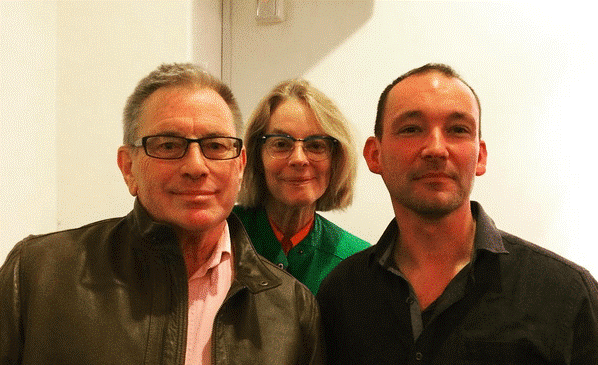
In Chapter Arts Centre, Cardiff, with Tony Curtis and Cynan Jones from 2016.

From left: Tony Curtis, Amy Wack (Seren Poetry Editor), Cynan Jones

Tony Curtis has been writing poetry for fifty years, and his 2016 collection, From the Fortunate Isles: New and Selected Poems contains poems from ten of his published collections, as well as fifty pages of new poems. This is a poet whose themes and variations remain consistent: a deep affection for his roots in West Wales, tender attachments to family, a profound interest in the wars of the last century, and an abiding fascination for all art forms, particularly painting and poetry.

Here we are featuring one of the new poems Tony read on the night – for all of you who missed his entertaining performance.

Seamus on the Tube


Looking away, not looking away –
The happenstance of what may change everything;
Those standing commuters moving off at Charing Cross
For the Bakerloo Line and then your eyes lifting

Above those seated opposite, as one does, to read
Between faster Broadband and Las Vegas –
“Where your accent is an aphrodisiac,” it says,
And where “what happens here, stays here,”

The Railway Children where in the white cups
Of the telegraph wires a young boy knows
That words are carried in the shiny pouches of raindrops.
Like this poem carried for you in the red and white Tube

On the Northern Line in cold January’s real freeze;
Snow is promised in the suburbs so everyone’s scarved
Against the weather. Words taking you back to the fifties
And his boyhood summers before everything changed.

Reaching Warren Street, you’ve read it
Four or five times, absorbed the innocent wisdom
And sense of the thing. Those people opposite
See a crazy old man mouthing words, appearing to sing.


Buy your copy of From the Fortunate Isles now: £12.99

Claim 20% off when you become a Seren Book Club member


A JAZZ SUITE


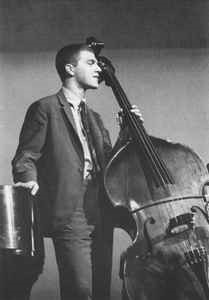
The Last of Scott LaFaro


What survived your death on the road from Geneva

Was the Prescott double bass from 1825

Made by that master luthier in Concord, New Hampshire.


Ebony and maple inlay, strengthened neck of slab-cut fir,

Pulled scorched from the wreck you died in, going

Off the highway into trees that night towards Flint


On Route 20 that stretches from East coast to West.

The charred remains identified by your St Christopher;

Your last gig – Newport Jazz with Stan Getz blowing.


But what lives is the trio’s final set at the Vanguard

In the Village two weeks before: inspired Bill Evans,

His hands, your hands in dialogue, with Paul Motian

Teasing and brushing the hi-hat and skins,


You underpinning the melody, counter to the tune.

Oh to have been that downtown girl at the corner table

Swirling her Manhattan over ice, caught up in your playing,


Feeling your bass rhythms enter her soul,

Cold shouldering the clutz who was paying,

And sensing the promise of better things. 1961, June,


With Kennedy still reaching for the New Frontier,

Rushing towards our cool future’s glow:

Milestones. Detour Ahead, My Man’s Gone Now.


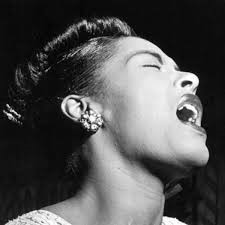
Billie Holiday: the colored canary


Good Morning Heartache, Don’t Explain.


Her voice was honey and sour lemons,

smoke-filled clubs and barbed wire.


That first gardenia pinned in her hair

drew blood as it pierced her head


and all the beauty in her life

was cut through with pain.


The men had come and the men had gone

for love is a faucet that turns off and on.


Lover Man, You Let Me Down, Mean to Me.


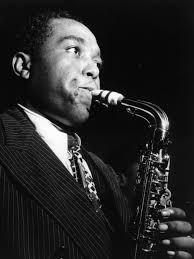
Charlie Parker: Chasin’ the Bird


Bird riding the subway ‘round midnight, into the early hours,

Times Square…23rd…Christopher Street…34th and Penn,

Washington Square…Columbus, on bourbon and heroin,

Switching cars and lines without purpose or sense,

The subway rails playing be-bop as he went.


And washing up in a club where Dizzy

Was at the bar checking out a new band.

‘Help me, Dizzy, why don’t you save me?

These kids can play, but now people just come to me

To see the world’s most famous junkie.’


Then a cab to the Rothschild Baroness at the Stanhope Hotel.

She called for a doctor, but Bird refused to go,

Just kept watching tv, the Dorsey Brothers Show,

That big band cruising and a guy who could juggle.

On her silk chaise longue Charlie’s heart gave up the struggle.


Still grieving his baby daughter, gone the year before,

His life had fallen apart.

The hole in her heart was a horn he wanted to blow life into,

Until his own heart played out. The autopsy report

Described a man of sixty. Charlie “Bird” Parker was thirty four.


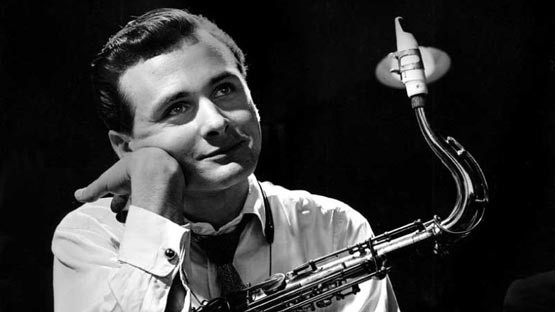
Scattering Stan Getz

East of the sun and west of the moon

Go your ashes into the endless Pacific

Off the coast of Malibu in blazing, blue June.

Friends and family on a yacht

That rides the swell of the ocean’s swaying

Bass line. With your record playing –


Billy Strayhorn’s Blood Count

Blocking out the gulls and the waves:

Over the melancholy matter of goodbyes, life blown defiant.


‘I’ve got a big sound. It’s deceptively mellow but it carries.’

It’s night music, the sad music of the going man.

Then ashes poured from your saxophone case by your grandson.


Brubeck at St David’s Hall


An old man walks slowly across the stage,

So stiff and tired that it seems

He will not make it to the Steinway.

The hall is so quiet: it takes an age.


He sits and as he touches the keys

The audience rises to its feet, comes alive:

Five-four, five-four, five-four, five-four, five-four

Take Five.


Caroline Gerbola on Conchita

For Peter Lavery


Pod comes running to our gang and says –

‘Seamus is catching something amazing

in the yard at the back of O’Leary’s!’


And when we got over there we started spying

around the wall to see –

this horse that was white, but not entirely,

with spots and strokes on it as if

a painter had flicked his brush with black and dark greys

over the paper.


A girl on top of him took off her Red Indian bonnet

and got the horse to bow down to a mat

she’d laid on O’Leary’s gravel.

There was no saddle that I could see, but a blanket and furs.


She had cowboy boots and leggings

and held in one hand a silver-topped cane or riding whip.

Her top was nothing to it and sparkly.

‘That would be the circus,’ said Pod,

but we’d all got that a mile before Pod who is not the fastest.


‘I’m asking my Ma for a ticket,’ he says.

But what would we be doing that for

with our money?


We’d seen the best of it –

the beautiful girl, the horse as big as a house

kneeling down for her and for us

because of what her legs had said to it

and her being one and the same with that magnificent beast.


Flaming June

The RA’s featured painting is Flaming June

In a large, heavy gold-leafed frame

This young woman’s astounding beauty is displayed.

As she reclines, her red hair falls

And spreads to the ground.

It is impossibly long, as if curtains were drawn to reveal her.


She is dressed in a diaphanous peach gown which clings

And locks our gaze – nipples, her right haunch angled to us,

Right leg over the left so that ankle and feet

Are precisely drawn under the silk.

You could stroke those toes.


Her eyes are blissfully closed;

She is far away in memory or dreams,

Resting against a parapet, on which grows

Oleander – that beautiful and toxic bloom.

Beyond is a line of silver sea and a vague other land.


Lord Frederick Leighton has given us this vision of desire,

A Victorian fin-de-siècle piece of erotica.


I sit on the bench in the middle of the room.

And when I next look up a woman in a black abaya

Stands in front, interrupting my gaze.

She holds up her iPhone to capture the painting,

As we all do in galleries these days.


Covered from head to ankle, her form is invisible.

I guess her eyes are dark.  Who knows?

On her feet are pink Nike Pegasus.

What colour is her hair?

What body is shaped under those loose, hanging clothes?

Her phone has Leighton’s beauty in focus.


What is it that she is taking away?

Who will she share this with, and what will they say?


The Painter Iwan Gwyn Parry

(1970-2025)

At the end, they had you on a drip.

Lover of fancy meals, gourmet talker-up of good food.

Which you secretly threw up.


Rachub – translates as a “safe place” –

But your village sounds like it’s racked and ribbed in extremis

With you starving there in the unforgiving weather and hard slate.

A long-gone marriage and two distant daughters.


Friends and colleagues and rapt, loyal students

Were not enough, and we are all bereft,

Lost in our helplessness to save you from yourself.


Always our dandy in the north –

Barbour International, Donegal tweeds,

Fine tan leather boots, polished, too good for trekking.

That silk-necktie noosed around your gaunt throat.


Our friend, your mentor, Peter, claimed he could,

On a rare cloud-free, clear day see the Wicklow Mountains

From his Deiniolen studio. His passing hit you hard.


Your views and angles were always liminal –

The cliffs facing west on Ynys Môn jagged above the waves,

Edging the Irish Sea, its depths of green and yellow and blues,

The Ferry a stroke of white, small and resolute,

Somewhere in the middle of its journey.


Or low wetlands arcing to the west, never a soul in sight,

The flats of mud and grass with spiked stakes marking out the way.

An overview of a refinery, a factory, as if you were flying over,

Not taking the boat from Holyhead.

It was all on the edge of Wales and the known world.


You were always going beyond, chasing

The infinite perspective lines of your shrinking self.


The last exhibition was large and light and full of energy.

And your paintings, the new ones, were visionary

Bright, vibrant imagined skies. A painter’s heaven.


That opening night, Cardiff was awash under Storm Amy,

The roads were rivers, the lights smeared,

So, there was never going to be a big crowd.

But you worked the gallery room, polite, laughing,

Your cheek bones sharp and frail; you were

Belsen-boned when Margaret hugged you.


I sent you an email, congratulating you on the work.

Seven years dry, feeling stronger, you claimed to see –

The way ahead to greater things, I can begin

To relax with this searching, and enjoy the exploration,

This archaeological study into myself and image-making.

I can return to my easel again.

I’ve missed its tranquillity.

Up-beat, with new promise and purpose,

You were keeping up the show.

But your pained soul, your spent body

Just said, “No.”


Talks offered to societies and festivals

PROFESSOR TONY CURTIS: FIVE TALKS

All fully illustrated with Powerpoint images


The Glamorgan Icarus

How the most famous American poem of the Second World War

came to be written in south Wales.

 Above me the stars, in all their brittle intensity, seem to watch with me through the long night’s vigil and I am not alone.

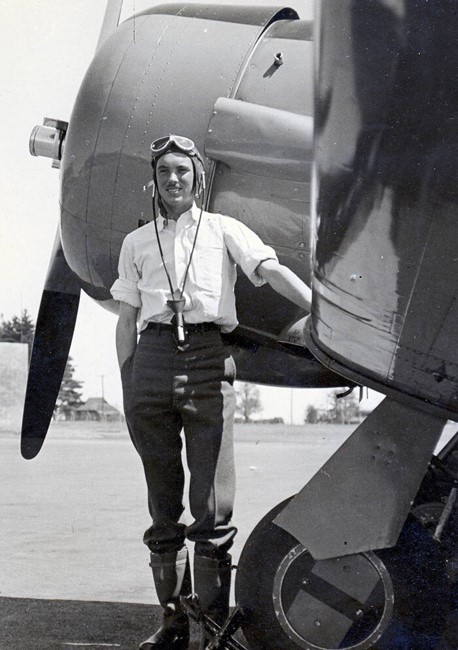
On the 18th of August, 1941 a young American airman took off in his Spitfire from the Operational Training Unit in Llandow, near the town of Llantwit Major in the Vale of Glamorgan. He rose to some 30,000 feet over the Bristol Channel and Somerset. He landed safely and later that day began to write a sonnet which he sent to his parents on September 3rd.


Oh! I have slipped the surly bonds of Earth
And danced the skies on laughter-silvered wings;
Sunward I’ve climbed, and joined the tumbling mirth
Of sun-split clouds, – and done a hundred things
You have not dreamed of – wheeled and soared and swung
High in the sunlit silence. Hov’ring there,
I’ve chased the shouting wind along, and flung
My eager craft through footless halls of air…

Up, up the long, delirious burning blue
I’ve topped the wind-swept heights with easy grace
Where never lark, or even eagle flew –
And, while with silent, lifting mind I’ve trod
The high untrespassed sanctity of space,
Put out my hand, and touched the face of God.

John Gillespie Magee’s poem “High Flight” is now held in the John Magee Papers in the Library of Congress Manuscript Collection in Washington D.C. It is one of the most quoted and cited poems in the USA’s war experience.

John Gillespie Magee Jnr. in training.

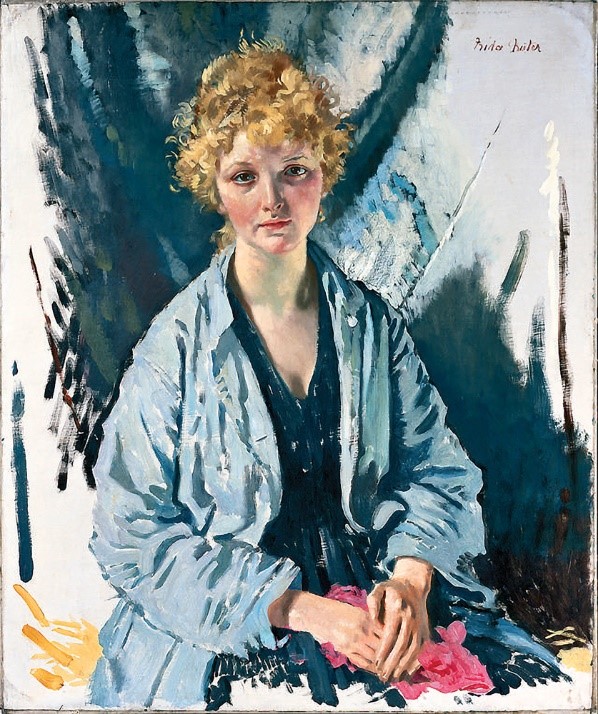
Augustus John, Sir William Orpen and the Beautiful German Spy: Artists and the First World War.

A Powerpoint talk with over seventy images by Tony Curtis

(also referencing Gwen John, Christopher Williams, David Jones, Paul Nash, John Nash, Sir Frank Brangwyn, Henry Moore, Otto Dix and John Singer Sergant)

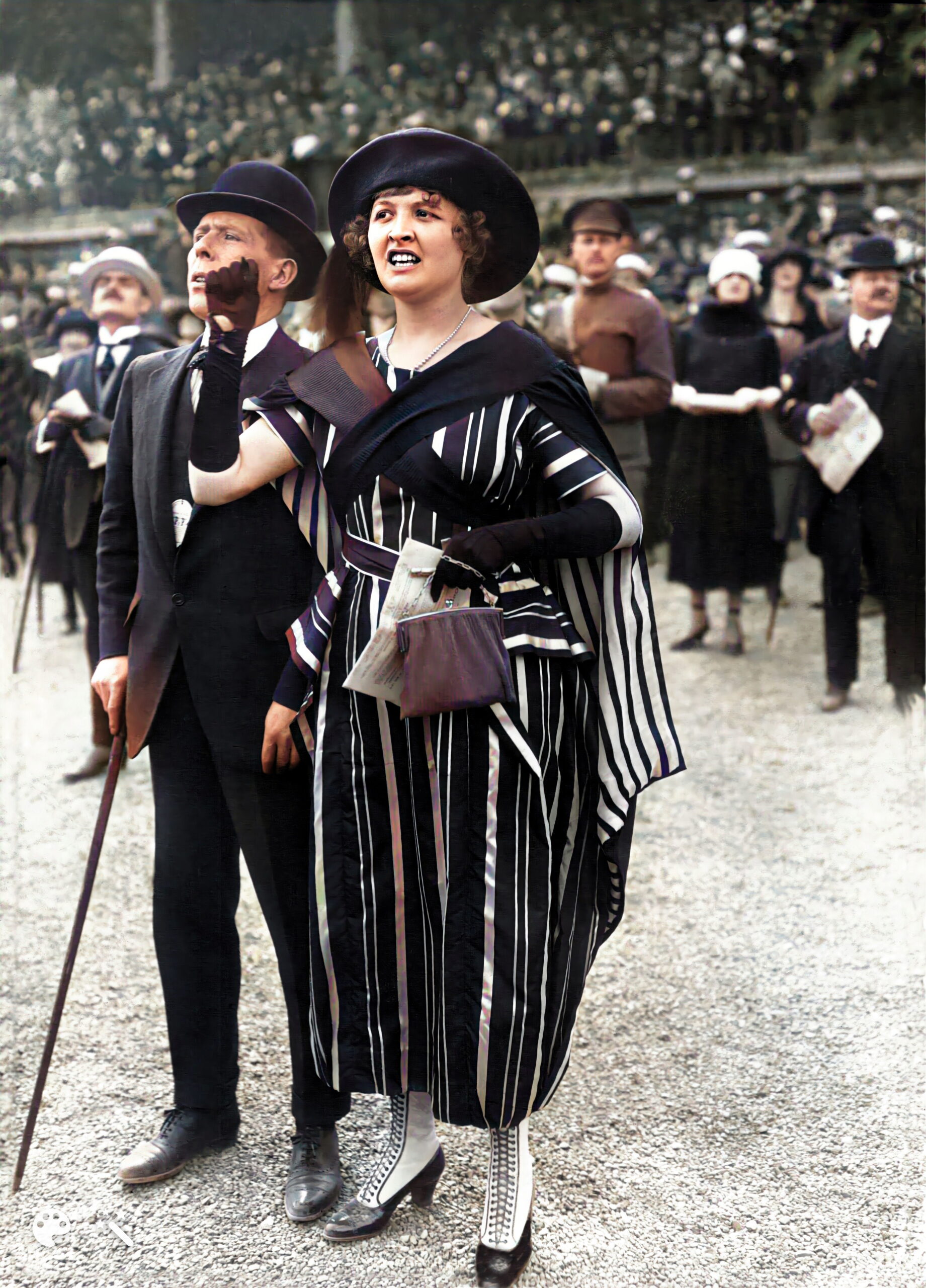
John and Orpen were two of the most celebrated painters of their age. They were also official war artists on the Western Front: each was sent home in disgrace; one fell in love and became the most compelling painter of the conflict.  They moved in the highest circles – Winston Churchill, Lloyd George, Charlie Chaplin, the press baron Lord Beaverbrook, the fabulously wealthy Sir Philip Sassoon. They painted the most beautiful society women and the world leaders at The Treaty Conference in Versailles in 1919.

And then there was Yvonne, “the German spy” implicated in their time on the Western Front.

Her story continues through the racing and heady Twenties and Thirties, the French Resistance and beyond.

Each of these historical figures would, eventually, be commemorated by public statues – but where and when?

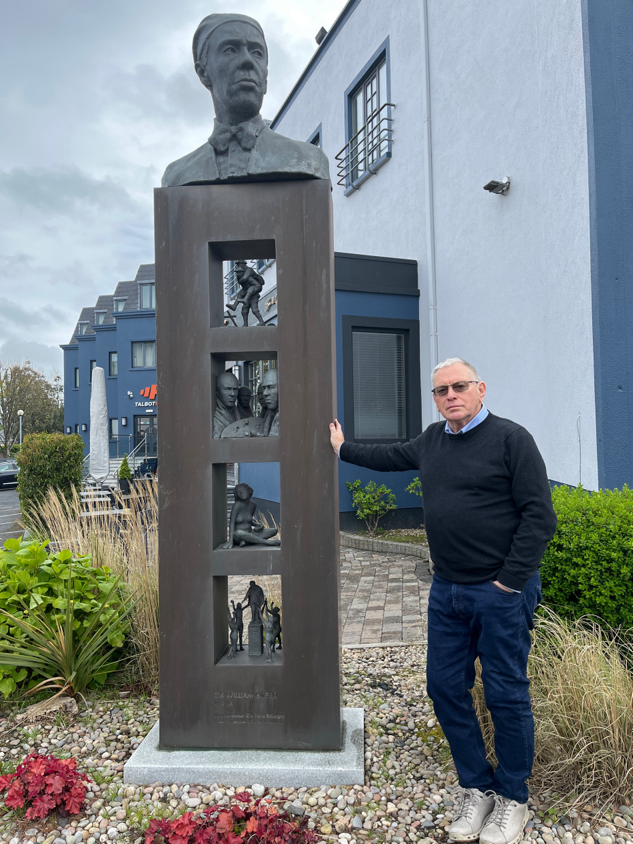
Tony at the Orpen statue in Stillorgan, Dublin 2024.

The “spy” Yvonne and Sir William Orpen at the races, 1919.

Augustus John in uniform at the Front……Sir William Orpen – self-portrait in France , 1917.

John Singer Sargent “Gassed”.


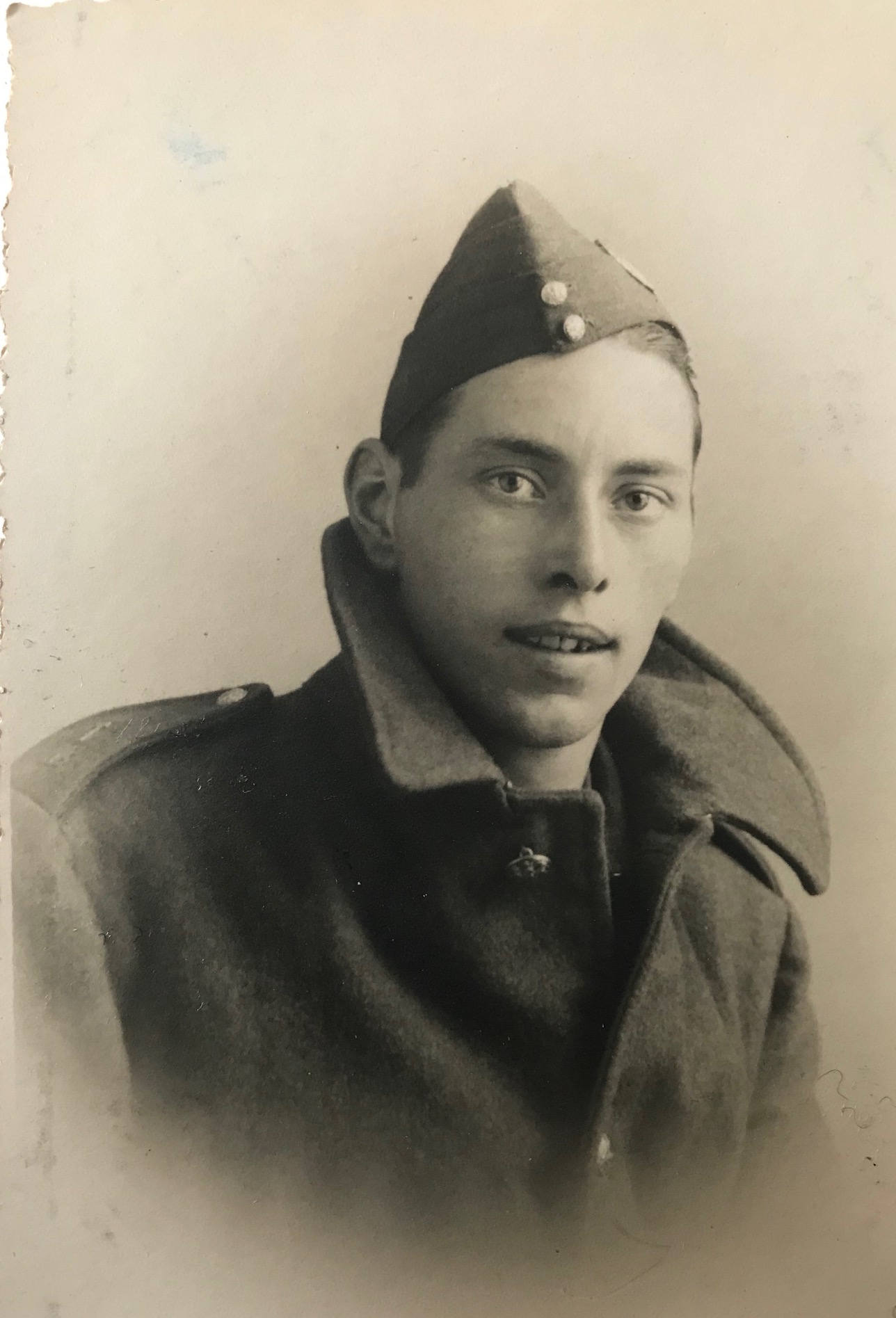
Wales and Second World War: poets, painters, pacifists and my parents.

            An illustated talk by Tony Curtis

Which Welsh poet helped to break the Enigma Code?

And why was Dylan Thomas machine gunned in west Wales?

What connects south Wales and the traitorous Nazi broadcaster “Lord Haw
Haw”?

This talk follows the chronology of his parents’ war service – the Royal Artillery and the Women’s Land Army – beginning in Pembrokeshire and Carmarthenshire, and the experiences of their contemporaries in Wales and beyond, at war and on the home front – including the work of Dylan Thomas, Vernon Watkins, Raymond Williams, Ceri Richards, Glyn Jones, John Tripp, Alun Lewis, Leslie Moore, Ray Howard Jones, Dannie Abse, Wynford Vaughan Thomas, Raymond Garlick and David Lloyd George.

This is a fully illustrated Powerpoint talk with extracts from Tony’s anthology After the First Death:Wales At War, which Seren published. With photographs and paintings, poems, fiction and first-hand accounts, this is a fitting focus for remembering the Second World War.

Leslie Thomas Curtis in 1939


From Pembrokeshire to Passchendaele and Perth: my family in the Great War

An illustrated talk which weaves stories about his family at war and some of the most notable writings and art of the conflict.

In this Professor Curtis traces some of the stories of the Curtis and Barrah families from Tallyho Farm in Llangwm to the Battle of Jutland, the Battle of Cambrai and a grave alongside those of Chinese labourers; to Perth, Australia and the ancient kingdoms in Mesopotamia. The remarkable narrative reaches as far as contemporary Hollywood. He will read from the work of amongst others Siegfried Sassoon, Kate Roberts, Hedd Wyn, David Jones, Wyn Griffiths, R.S.Thomas and Bertrand Russell. He will illustrate his talk with the art of Paul Nash, David Jones, Sir William Orpen, E.H. Shepherd, Lucy Kemp-Welsh and Frank Brangwyn.

Tony has researched the Great War experiences of both his Pembrokeshire and Berkshire families. Every region and nation in Britain and its empire served in the war and suffered huge losses. Remarkably though, three of the most significant Great War writers served in the Royal Welsh Fusiliers: Robert Graves, David Jones and Siegfried Sassoon and there is a particular Wales contribution to the fighting and to those objectors of conscience. There will be readings from these writers and others from Tony’s Seren anthology After the First Death as well as his own poetry and recent research. The Barrahs from Pembrokeshire and the Curtises from Berkshire served and died in conflicts from South Africa and Mesopotamia through the Western Front to the North Sea. Tony will weave together untold, remarkable stories and some of the most memorable writing of the century in a tour that already takes in three festivals and National Museum of Wales and the National Library of Wales.

Tony has produced three books on the subject of war and is the only poet from Wales to have published a collection dedicated entirely to the subject.  War Voices (Seren 1995) brought together poems from the American Civil War, through the two world wars to the Balkans conflict and the nuclear threat. And his anthology After the First Death is a definitive collection of the Welsh experience of War. Seren published a companion volume of essays: Wales at War: Critical Essays on Literature and Art. 

Above:

James Charles Thomas, the writer’s Gran’s cousin who died Nov. 1917 in the Battle of Cambrai. In the twelfth century the Llangwm area was settled by Flemings brought over by Henry I; James by dying in Flanders was completing a circle.

And the painting “Zillebeke, 1917” by Sir William Orpen.

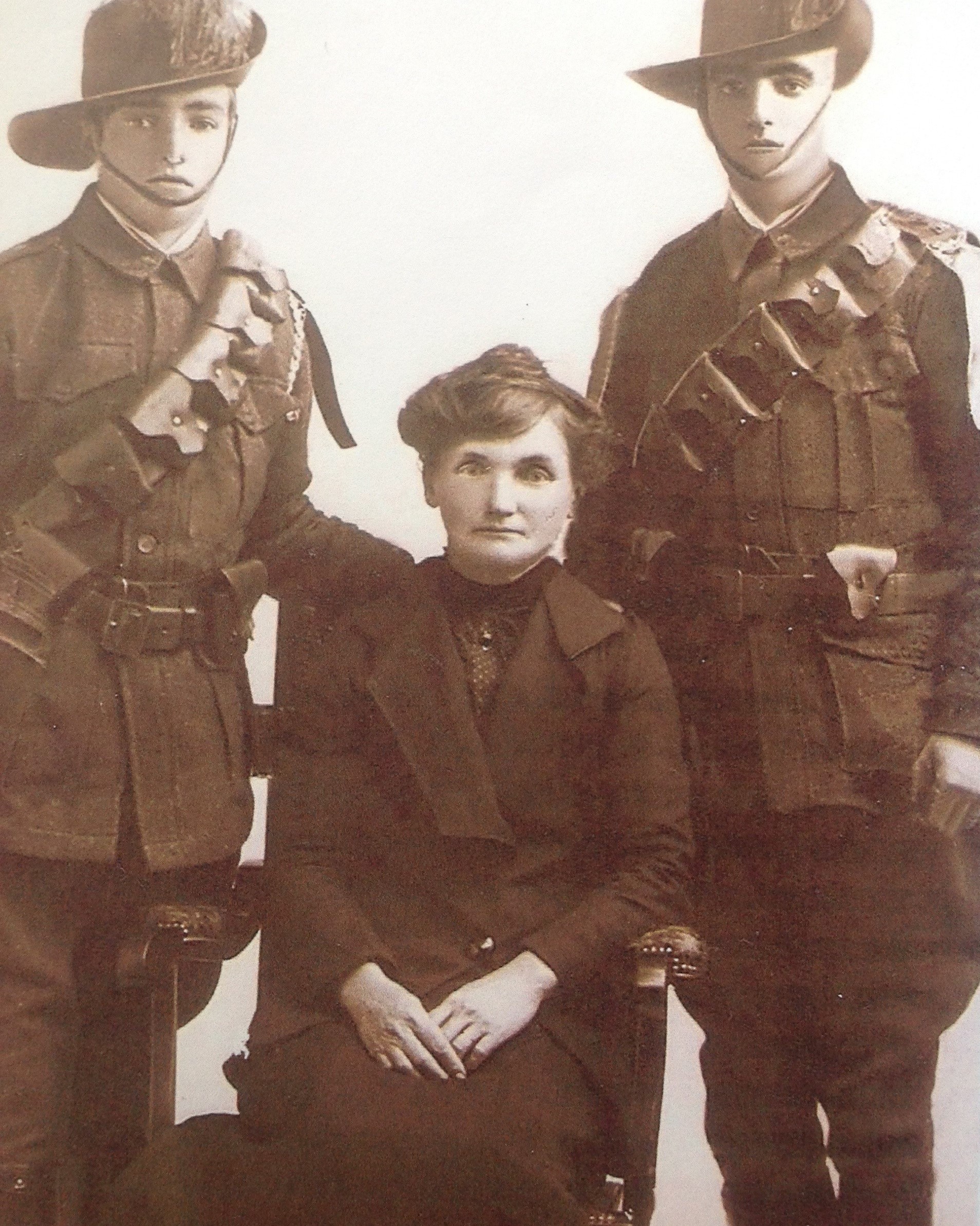
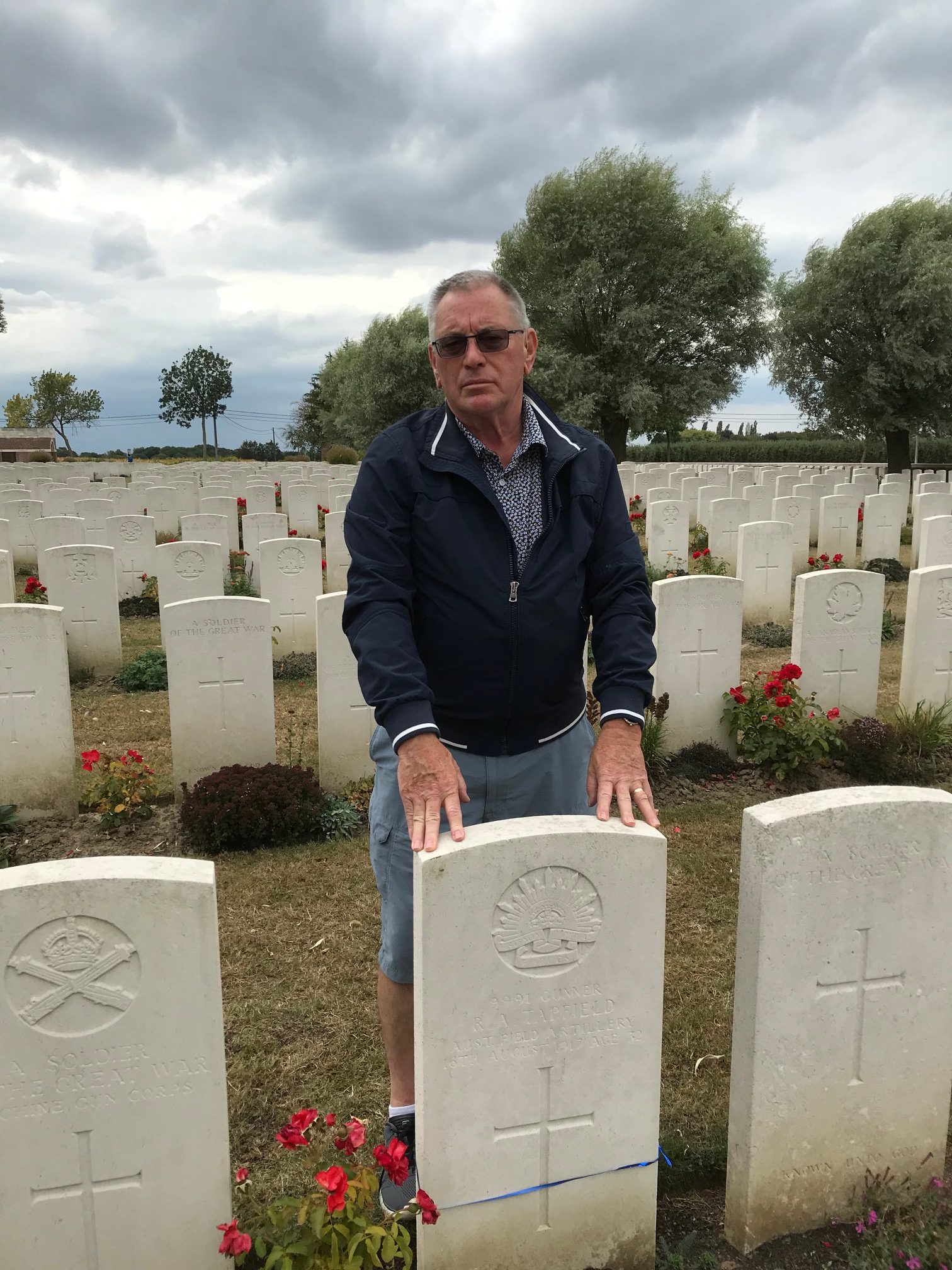
Below are Fred and Jack Barrah in Australian Light Horse uniforms with their mother Sarah just before embarking for Europe and the war in 1915. They were descended from my family who emigrated as “Diggers” in 1856. Both men were wounded, but survived.

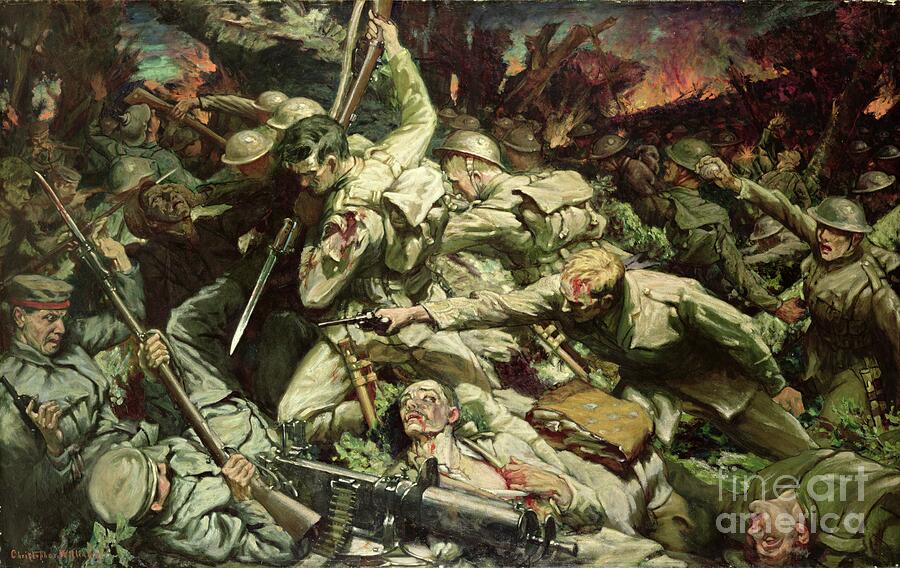
The Welsh at Mametz Wood by Christopher Williams

At the grave in China Wall/Perth cemetery in Flanders at the grave of the man whose death was witnessed by my Australian relative Fred Barrah in 1917.


Darkness in the City of Light – Occupied Paris and its most notorious serial killer.


At the end of the war in Paris the most extraordinary murder trial took place in the Palais de Justice. Dr Marcel Petiot – France’s most prolific mass murderer, or Resistance patriot?

Professor Curtis’s talk, based on his prize-winning novel, explores a mind occupied by evil in a city occupied by the Nazis. It is an intriguing and barely credible narrative. It is a true story.

Petiot’s trial achieved international fame.

Darkness in the City of Light – a novel

Professor Tony Curtis continues to give a series of talks about his novel, published in November, 2021 by Seren Books, which is receiving enthusiastic reviews.

This is a Powerpoint presentation- 50 mins with questions to follow.


Contact Tony Curtis – profcurtis@btinternet.com 07789182790

www.tonycurtispoet.com for further biographical information and list of publications

The ‘city of light’ under German occupation: Paris, a place, a people, lives in flux. And among these uncertainties, these compromised loyalties, these existences under constant threat, lives Marcel Petiot, a serial murderer. A doctor, a resistance fighter, a collaborator: who can tell? Not even the people he kills.

Petiot is the embodiment of the chaos and brutality of war, of the evil and inhumanity of dictatorship. With the liberation of Paris, Petiot is forced into new roles and new conspiracies to avoid trial and the guillotine.

Truth and fiction blur fundamentally, plausibility is tested, answers are few and questions multiply. Morality is more sharply in focus than ever, and more expendable. Stretching backwards and forwards through the twentieth century, this remarkable multi-form novel combines fiction, journals, poetry and images in its investigation of what war can let loose, and how evil can dominate a man.


&


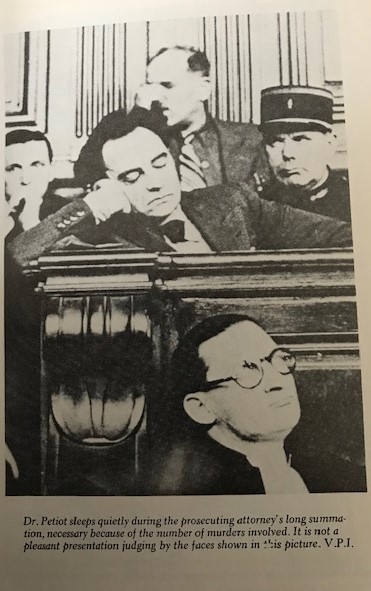
Dr Marcel Petiot in his trial, 1946

World War Two Paris brilliantly brought to life through the eyes of a range of characters – AMAZON

&

“Darkness in the City of Light is a genre-defying new novel by Tony Curtis” – David Lewellyn reviewing the book in Nation Cymru

“It is a vivid, kaleidoscopic portrait of Paris before, during and immediately after its liberation. We encounter Nazis in the full grip of hubris, the gallows humour of cabaret performers in the city’s seedier nightclubs, and witnesses to Ernest Hemingway and Fred Astaire at the Ritz.

If Petiot isn’t our main character, then Paris certainly is, and Curtis paints a picture of it, much like the city itself, in various shades of grey, a character it maintained decades after its Nazi occupiers became the stuff of history books and movies. As the horrific events of November 2015 and the Notre-Dame fire of 2019 remind us, there is still much darkness in the City of Light.”

&

Will I be the first to call it a tour de force? I won’t be the last. It is a highly readable novel, and a splendid union of documentation and imaginative reconstruction, as well as a convincing rendering of different voices. I was enthralled, and full of admiration for your art. – Professor Jeremy Hooker


                                            &

WALES ARTS REVIEW – Nathan Munday


For better or for worse, what happens in war, stays in war. Does it? No. Tony Curtis’s thrilling new novel, Darkness in the City of Light, doesn’t shy away from the idea of ‘evil’ and ‘darkness’ seeping out of that period of flexible morality. Its Tableaux Parisiens is a genre-defying survey of a fissiparous city whose inhabitants ‘move in the shadows’. This is a city where the Gestapo are always ‘a few streets away’, where nothing is ‘my business’, and where ‘cries of help in the distance’ are repeatedly ignored. Many of these shadows never see light again especially after entering a certain ‘house in the Sixteenth’. Everyone seems to take these stories ‘with a pinch of salt’. After all, ‘what can you believe these days?’ is a recurring mantra running through the novel.

Curtis cleverly curates this documentary on paper. Weaving poetry with prose, he reveals the limits of language, showing us how different fonts changes the way we look at a story or the way in which we view its speakers. There are Holocaust allusions throughout making its Parisian setting microcosmic.

Darkness in the City of Light is an important book which gives a voice to the voiceless, yes, but it also shows how quickly things can go awry. Seren deserves praise for its book design and for recognising the importance of these experimental, multi-form novels which challenge conventional boundaries. I hope that many more poets will follow Curtis’s example.


&

A novel of intrigue and complexity…..it’s a haunting picture, one where horrors and graphic cruelty are juxtaposed with beauty that is created by people either in their small acts of kindness or their grand acts of art and bravery. – Yvette Vaughan Jones in Planet Magazine.


&


YORKSHIRE TIMES April 2022  arts

Clearing Up the Havoc: Darkness In The City Of Light By Tony Curtis


If you stand at the end of the raised platform of the Trocadero, and look down over the parapet to view the manicured gardens that lead to the Eiffel Tower, you might not be aware that you’re following more or less in the footsteps of Adolf Hitler. Flanked, on a June day in 1940, by his architect Albert Speer and Arno Breker, the Reich’s sculptor in chief, the Fuhrer surveyed the hitherto biggest prize in his conquistadorial career, from an entirely symbolic vantage point. Not one to waste an opportunity to bask in the reflected glory of victory and the subjugation of an old enemy, we needn’t doubt his choice of location in the dead heart of Paris, just as we shouldn’t be surprised at the signing of the terms of French surrender in the same railway carriage at Compiègne wherein the Treaty of Versailles was ratified in 1918.

…Curtis’ greatest triumph in a book of wonderful, authentically-rendered prose testimonies, is realised during the liberation of Paris…

Taken from a position somewhere below, and directly before, the Tower, the cover image of Tony Curtis’ absorbing new novel echoes that same sense of hubris. And the collective grievance that was rendered incendiary by the Nazi occupation and liberation of France, is one of the motors for Curtis’ foray into the internecine madness that followed. Relying heavily on an astonishing wealth of research, Curtis’ book rejects conventional narrative forms in favour of a patchwork assembly of contemporary ‘witness’ statements and observations which build to create a near-dystopian picture of a city in turmoil. The ‘talking heads’ emerge from several sides of a divide whose border is rendered necessarily fluid: complicated ethically, and sometimes judicially, by the presence of Vichy collaborators, the Gestapo on every street corner, the Resistance, and the lumpen populace who find themselves trapped in a maelstrom of contradiction and general anxiety, Curtis’ complex landscape turns increasingly dark and violent.

For several years Petiot practices his murderous campaign with impunity, proclaiming outrage at the suggestion of improbity, and he remains elusive, even unto the guillotine.

The poet and novelist’s glossary of the significant players in the dramatis personae reads like a Revolutionary Directoire, for the excess of fratricidal bloodletting cannot fail to recall that earlier round of implosive insanity. The mercurial, deluded figure of Marcel Petiot, upon whom the narrative hinges, represents the extremity of madness, the debased level to which human nature may stoop when obliged into penury and dependence by the Wehrmacht and their Parisian administrative puppets. Petiot is Conrad’s Kurtz, a maverick Svengali who dispenses justice according to his own rules, and murders and maims with the tacit approval of both sides: as a ‘doctor’ working patriotically in behalf of the Resistance, and as an emissary of the Third Reich, exposing their underground activities to the secret services. For several years Petiot practices his murderous campaign with impunity, proclaiming outrage at the suggestion of improbity, and he remains elusive, even unto the guillotine. The circling of Petiot continues unabated throughout Curtis’ multi-layered story – the narrative’s trajectory observes a linear chronology, but is shadowed by another history, tracing causes and familial consequences – and if Petiot’s lies are unconvincing, his condition is a symptom of, and metaphor for, a much wider existential malaise.

And that terrible inferno is drawn with perspicacious skill, giving vent to each arc as it intersects with, or diverges from, its inflammatory opposite: the German Officer whose proclivities bespeak cognitive dissonance as though it were a commonplace; the ‘decadent’ Jewish artists and musicians who are shipped off to the ‘departure lounge’ of Drancy for processing and onward transmission to Ravensbruck or Auschwitz; the British soldiers who pick up the postwar pieces; and lastly the pitiless ‘good doctor’, Petiot himself, who’s self-proclaimed medical training convinces many of his veracity.

But Curtis’ greatest triumph in a book of wonderful, authentically-rendered prose testimonies, is realised during the liberation of Paris: the release valve of celebration, as enjoined in the hubristic outpourings of writers, artists and war photographers who flock to the city, borders on self-indulgent lunacy; the definitive meaning of their actions is best conferred in the tranquility of hindsight. Not least in the figure of the swaggering Ernest Hemingway, who takes to the adulation of the streets like a god to grateful shadows:

“Hemingway arrived like a loud storm. Bourbon, cigars, a box
of grenades ‘A present for my friend Picasso’. The next day he
presented me with what was left of an SS uniform he said he’d
from the body of a Boche he’d killed. A story teller”.

Curtis’ tableau is both preposterous and narcotic. The carnival of seduced picaresques who foregather in the bars and hotels of the capital – Picasso, Philby, Orwell, Lee Miller, Dietrich, Chevalier – is symptomatic, also, of a landscape of naked extremities. Samuel Beckett’s fragmented reading of a dominion of waste is pivotal to a narrative of war, of religious corruption, of decay and renewal:

“Post-war St Lô …the sudden scurry of rats
above my head
in the ruins of everything…
and the necessary damage of war…
…rats, impervious to bombing it would appear
not the bodies they feed on…
it is a system of cycle nothing goes
to waste at this time but time
clearing up the havoc…”

The end, for Petiot, is as psychopathically defiant as the absurdity of his self-belief is unwavering. A fitting conclusion to the hideous deformity of a life, the drama of Madame Guillotine demands the cleanest of breaks, if only to draw a line under a complex and troublous past. The ‘goodnight kiss’ she delivers signifies a sleep before a better day.

Tony Curtis’ fine novel is a synthesis of negotiated truths, a harmonising of belief from many disparate testimonies, and it is to his huge credit that the picture he paints is both disturbing, and coherent.

Darkness in the City of Light – A Novel is published by Seren.

More information here: https://www.serenbooks.com/productdisplay/darkness-city-light


&


The ‘city of light’ under German occupation: Paris, a place, a people, lives in flux. And among these uncertainties, these compromised loyalties, these existences under constant threat, lives Marcel Petiot, a mass murderer. A doctor, a resistance fighter, a collaborator: who can tell? Not even the people he kills.

Petiot is the embodiment of the chaos and brutality of war, of the evil and inhumanity of dictatorship. With the liberation of Paris, Petiot is forced into new roles and new conspiracies to avoid trial and the guillotine.

Truth and fiction blur fundamentally, plausibility is tested, answers are few and questions multiply. Morality is more sharply in focus than ever, and more expendable. Stretching backwards and forwards through the twentieth century, this remarkable multi-form novel combines fiction, journals, poetry and images in its investigation of what war can let loose, and how evil can dominate a man.

Paris and this novel have a fascinating range of characters – Pablo Picasso, Ernest Hemingway, Coco Chanel, Maurice Chevalier, Malcolm Muggeridge, Churchill and de Gaulle.